If informed prior to playing, that Ubisoft aimed to deliver the strengths of Assassin’s Creed, Skyrim, The Witcher 3 and more in a single experience spanning well over sixty hours, I would’ve assumed they were flying far too close to the sun. It would appear that if Ubi were to retell the tale of Icarus, however, he would have continued to soar. The writing misses few beats throughout the odyssey, despite a lack of precision when it comes to delivering the most important moments. The blend of engaging main story, and contained but no less compelling side quests make this game feel like a more light-hearted Witcher, and that’s a great thing. Sadly, feathers of the gameplay became unstuck. The stealth is passable, the combat is underwhelming outside of some awesome boss encounters, and the gameplay loop is a thoughtlessly designed system where we interact with the HUD far more than the awesomely realised Greek world (though this can be alleviated in a number of ways – see the fleshed out gameplay comments for details). Whilst my comments on the gameplay are scathing, I’ve enjoyed at least eighty hours of Odyssey, and have been entertained all the way: this game deserves swathes of praise.
Story concept1: 10/10
Story execution2: 8/10 (Spoilers within)
Satisfaction through gameplay3: 5/10
World4: 10/10
Immersion through gameplay5: 4/10
(These scores evaluate the main game, and ‘Lost Tales of Greece’ free expansion. I played on discovery mode. I played as Kassandra – the Alexios performance likely differed, for better or worse.)
1Though they overlap, the main story explores three areas: Kassandra’s broken family, the Cult’s grasp of Greece, and the long-lasting significance of the Ancients (cleverly intertwined with Greek mythology). Separately, the side quests serve to enrich the world, make it believable, and to challenge the player on themes not explored by the main stories (Sokrates’ quests are a good example of this). These four ingredients have the potential to create intrigue, to provoke thought, and to be emotionally impactful – for this reason I believe Odyssey is conceptually sublime.
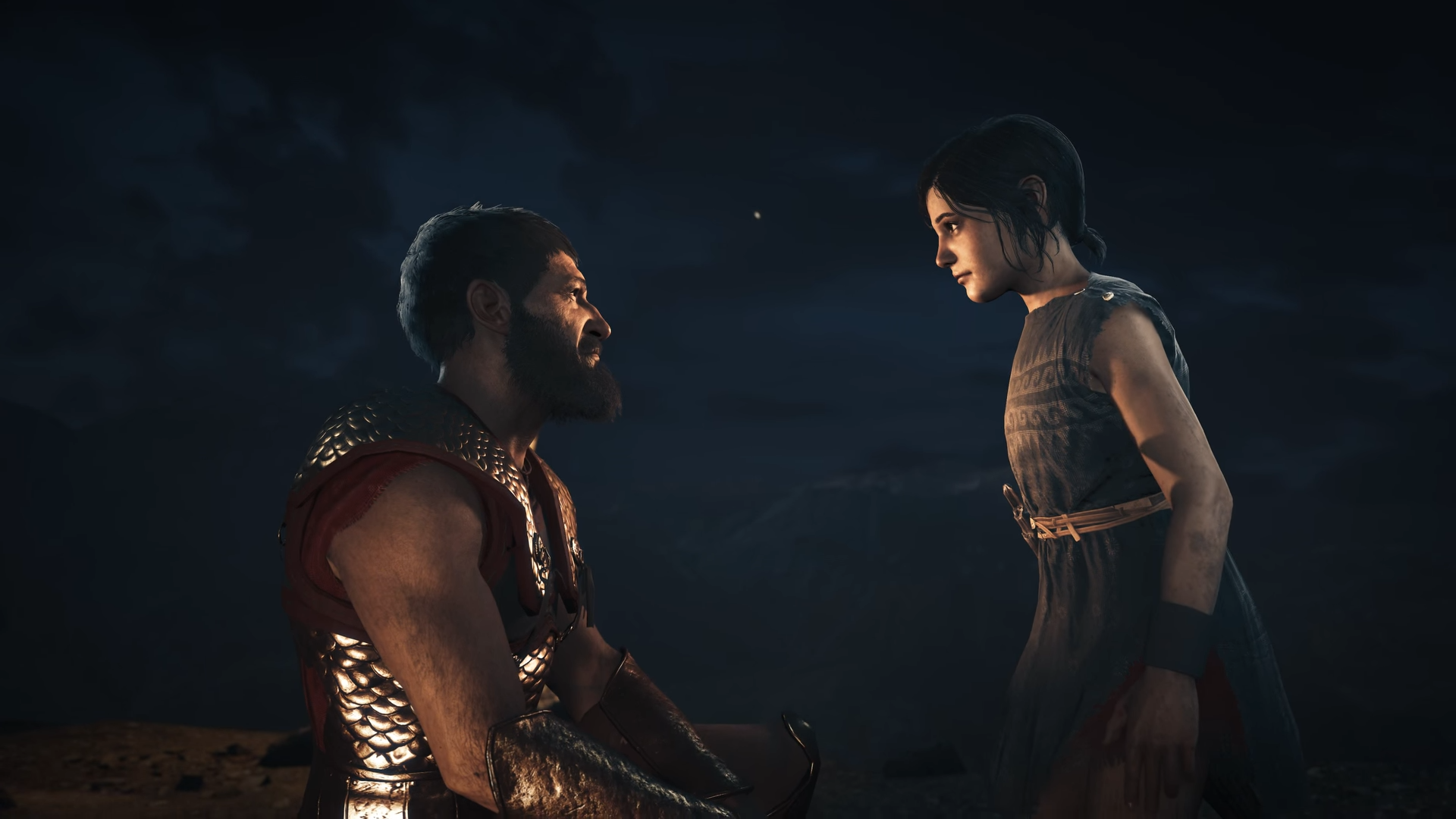
2When it comes to story execution, there are tangible issues with the execution of various story beats, as well as some pacing mishaps, which sadly withhold the fantastic writing from a perfect score. The biggest example of a pacing blunder is the fall of Athens. The cult killing Phoibe and Perikles near simultaneously appeals both to the player’s sense of duty to stop them, as we’ve just seen them achieve a significant milestone in their evil plan, and our emotional desire to stop them, as Phoibe was both one of Kassandra’s truest friends, and a child, however at this stage we have just completed three separate mini stories nowhere near Athens, concerning our long lost mother, meaning by the time we’ve returned we need time to re-acclimatise to everything – instead, after five hours of barely related content, these two hugely significant deaths occur within about fifteen minutes. I would have liked to see an hour or so where Kassandra spent time with Phoibe, having her discuss her new life in Athens, Perikles, and how she thinks maybe something is brewing, to bring the player into the correct headspace before the big moment. My greater gripe lies with the lacklustre execution of some vital story beats, including what I would consider the crux of the game (‘Where it all began’). There are two reasons why the crux fails: a reliance on the limited character expressions available through the dialogue system, and a drop in the writing quality. Understandably, the general dialogue system cannot capture some heightened character emotions adequately. This doesn’t change the fact that many points where expression is crucial are delivered using this inferior system, handicapping them somewhat. When confronting Deimos, most of the scene is carried out through the dialogue system, because player choice is necessary, and yet this means moments like his villainous laughter simply don’t convey what they are supposed to, and serve to de-escalate the situation. This greatly contrasts some other scenes, such as being reunited with Myrinne, which are perfectly executed, and subsequently have the desired effect. As for the writing, being defined as ‘the weapon of the cult’, Deimos’ character until now has been one who has ‘done terrible things’ (understatement), but only because he’s been manipulated to see them as right. Therefore, this should be the moment where you confront the lies he has lived his entire life, reforming his perspective of the world, and causing him to join you (assuming you don’t choose to kill him). Instead, the trigger for him switching sides is merely the fact that Kassandra is unwilling to fight him – when he breaks down, he still seemingly believes that Kassandra threw him off of mount Taygetos in a bid to kill him, that the cult didn’t originally order his death, and probably that Myrinne abandoned him as a child, since when he accuses her of exactly that all she responds with is ‘I loved you’. Some claim when he touches the spear, Deimos sees the truth through visions, and yet the spear never glows or gives sound cues as it does every other time it gives someone a vision throughout the game: if it is in fact the case that Alexios saw the truth through the spear, the lack of any cue identifying that is just as much of an oversight as the truth never being explained to him in the first place. Something of a solution to the former problem could be simple: if no time had been put into having two separate protagonists, and lesser side quests (everything that isn’t an ‘!’ ) surely we could’ve had more accurate dialogue scenes, and a greater number of the bespoke cutscenes. The way the game stumbles at the last hurdle, and some other big points, holds it back from a perfect score, but does not invalidate the fact that the majority is robust.
When extreme expressions are not required the dialogue system is very good. This is proven in the ‘lost tales of Greece’, which possess a heightened level of polish in character interactions which should be strived for over quantity in the future.
The choice-driven path the game sets you down enriches the player’s sense of responsibility during both main quests, and side quests. I have written more extensively about why I think this is a mechanic that adds so much to these experiences in ‘The importance of player choice in The Witcher 3’..
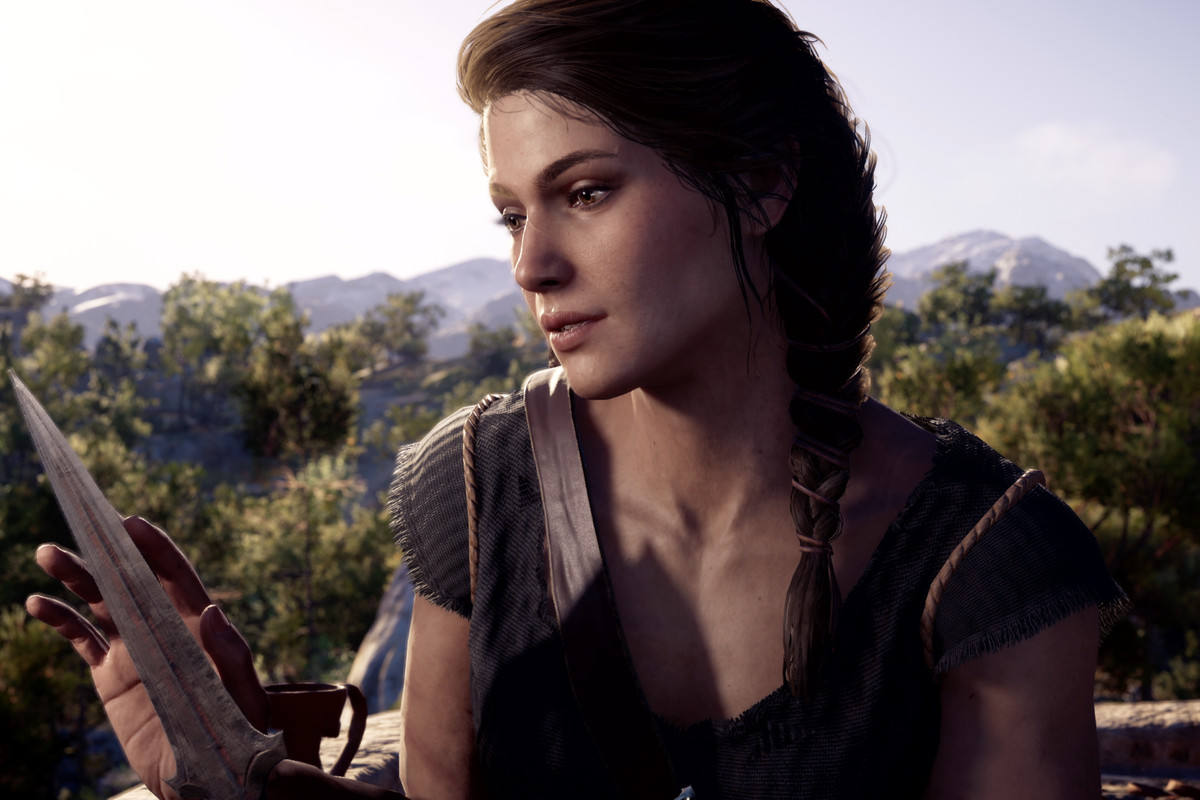
Kassandra was fantastic protagonist. Her openly charismatic nature epitomises the playful feel of Ubisoft’s ancient Greece, and contrasts many of the gruffer leads in other titles without dissipating any tension when stakes are raised. This also benefits from the use of player choice, as it ensures our alignment with the character, and heightens our desire for their success, again, I’ve touched on this elsewhere if you’re interested.
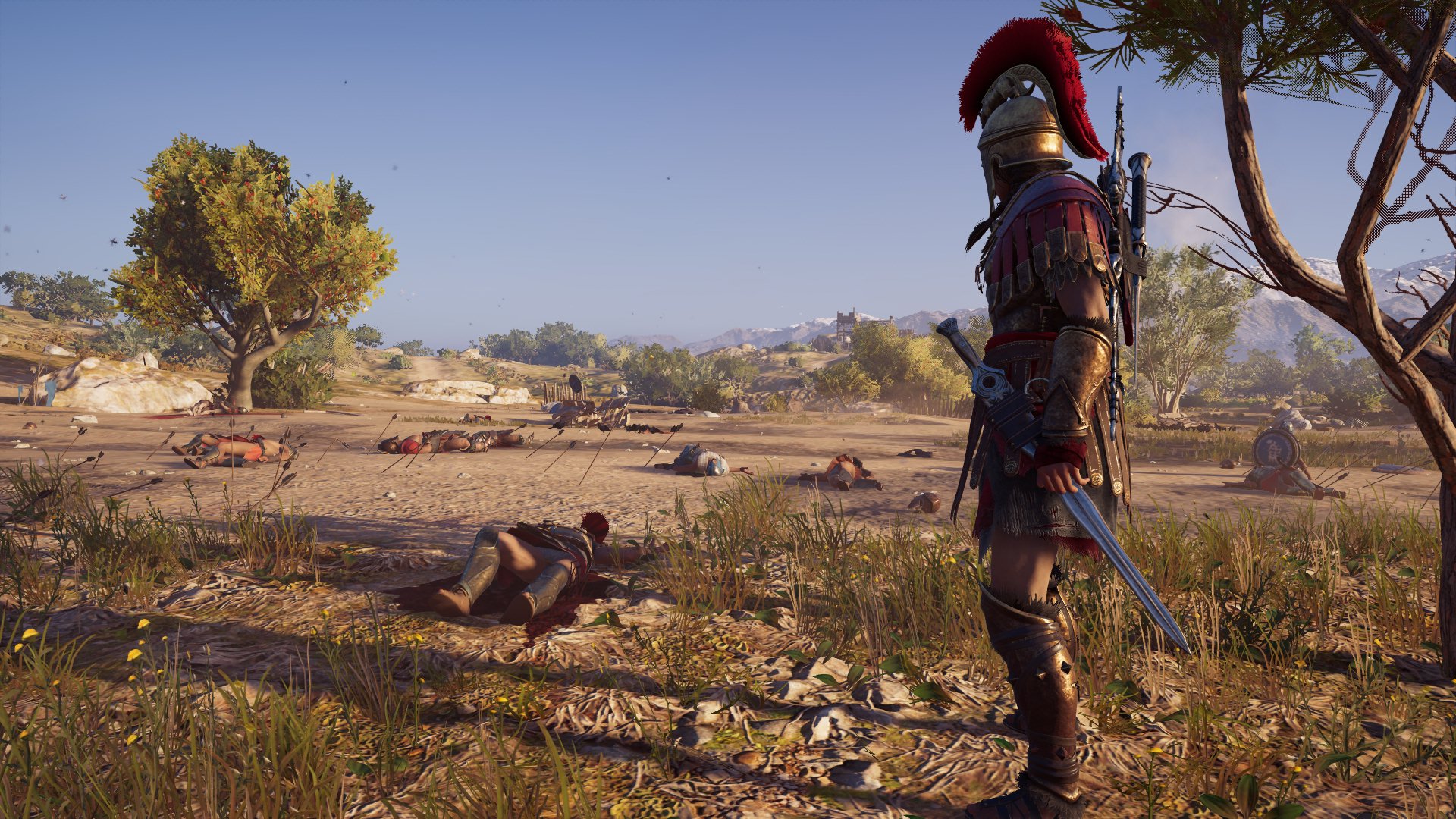
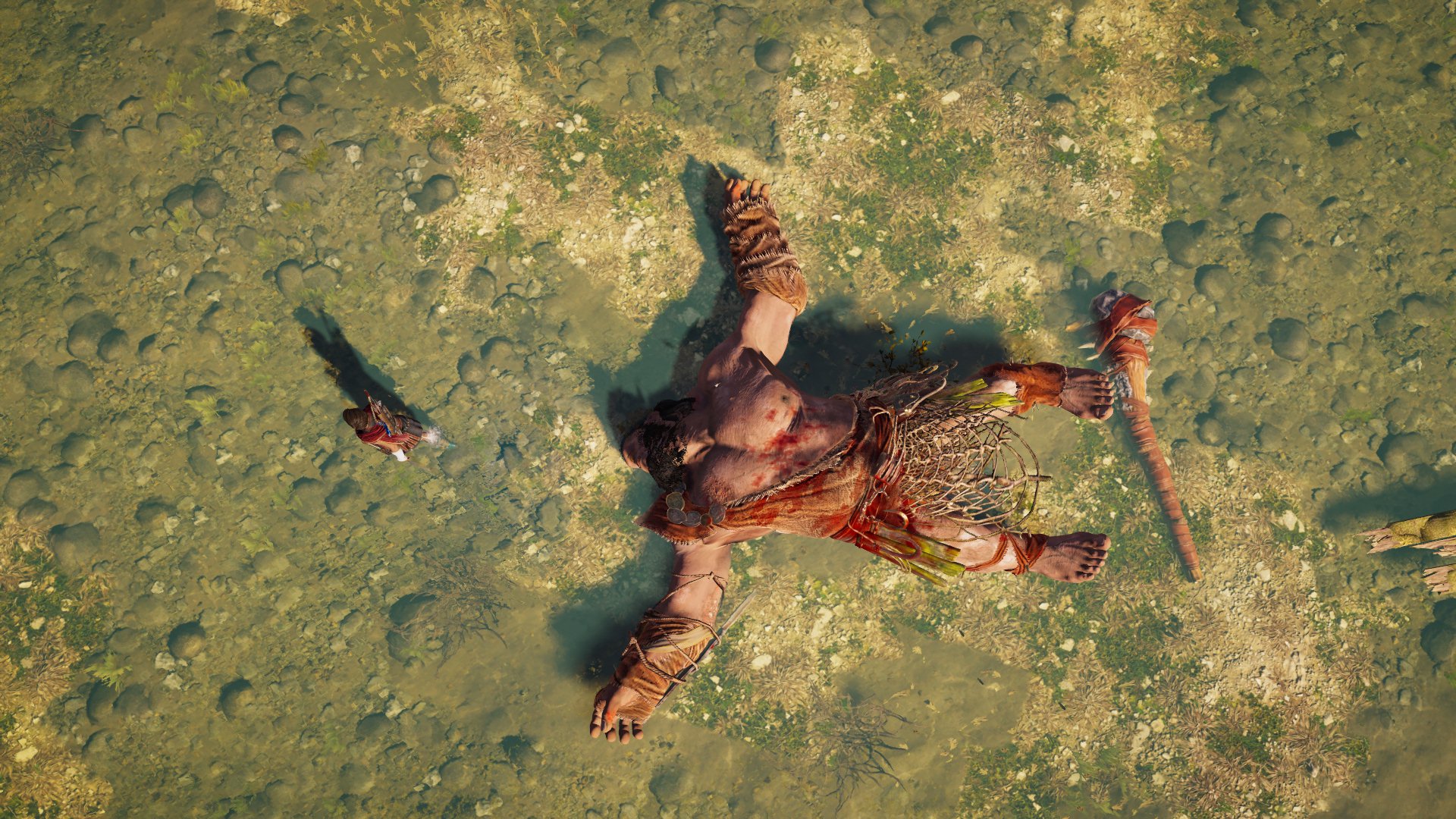
3The way rpg elements have been implemented, along with the combat design, sadly renders the gameplay underwhelming. Odyssey has us design a kit which enables one playstyle, instead of boosting it – if you prioritise stealth abilities, for example, you will be passably powerful at stealth, then unreasonably redundant in combat and at range. This doesn’t match the actual challenges you face in game, as you will be forced into combat no matter how much you focus on stealth. I would argue that if we are to be forced into a situation without notice, we should be equipped to deal with it to the point of adequacy. This combines with the already slow time-to-kill, and generally uninspiring standard fighting to create a real lack of impact – fighting grunts was never difficult, but still felt time consuming, where even my special attacks did negligible damage. At times I would watch as Kassandra ran the spear of Leonidas relentlessly through the chest, neck, and cranium of a grunt, only for him to regain a standardised posture and continue fighting with over half of his health remaining – how empowering. If the challenges posed to us whilst in combat were diverse, I would be more accepting of their drawn out nature, but over ninety percent of combat is best approached by simply dodging, then striking, then repeating, no matter the foe, meaning it feels repetitive and dull. The abilities tree seems to be the way they intended to add thought into the combat, however the number of adrenaline bars the player has access to means we don’t have to be particularly selective about which ability to use, because we have enough adrenaline to just spam them. Perhaps limiting us to three adrenaline bars would improve this, as we then might be so restricted as to have to sacrifice defence for offence, and choose the best form of offence for the foe, since we wouldn’t be equipped to release them at the rate and volume of a belt-fed machine gun. I’d like to highlight the Medusa battle as an example of great combat – there is a method behind the way you have to fight her, and adrenaline has to be built up on the sparingly present mobs, meaning both movement patterns and shot selection must be thought of at all times. For me, the rest of the combat in the game needs either to replicate that degree of necessary player thought, or simply take less time, because its lengthy nature exacerbated what could have been a passable system.
Additionally, the AI needs polish. There’s nothing worse than having an entire city of civilians become hostile to you, because in the process of beheading the source of their oppression, you accidentally nicked their finger – that civilian should’ve sought a bandage, not retribution.
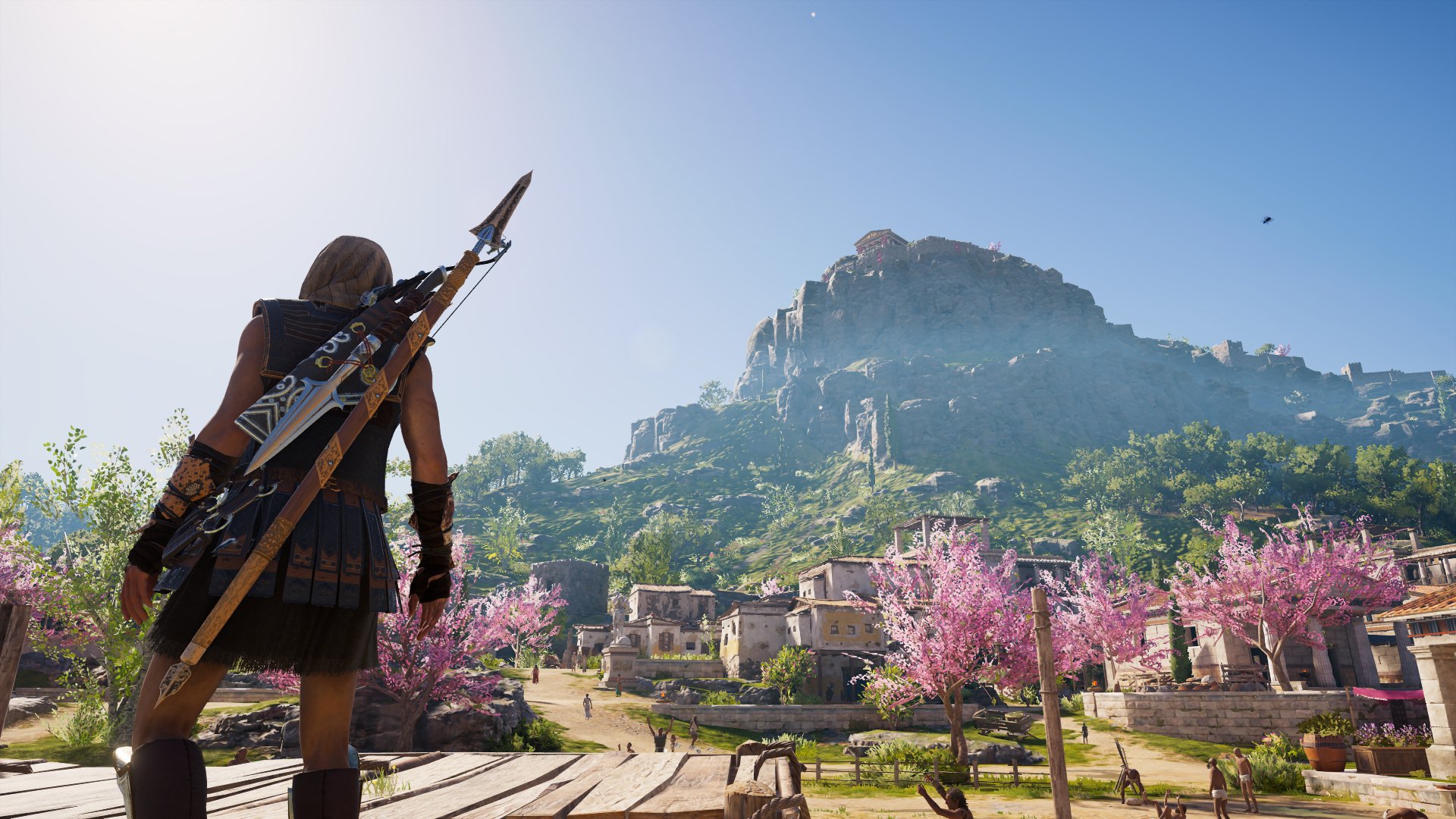
Stealth had the potential to be rewarding – it’s a nice ego boost being told I won’t stand a chance taking on a villain due to how heavily guarded he is, only to avoid his entire guard and erase him with cunning. That said, there is no significant shift in the approach to stealth compared to any past games, and no development as we play, meaning it is familiar from the outset, and stretched to the point where it grows stale. On this topic, I will add that dividing the hunter and assassin stats as drastically as they have results in the bow losing its resourcefulness for those looking to play as an assassin, further restricting gameplay possibilities. Perhaps a perk which limits us to having a quarter of our arrows, but them dealing double damage, would have remedied this.
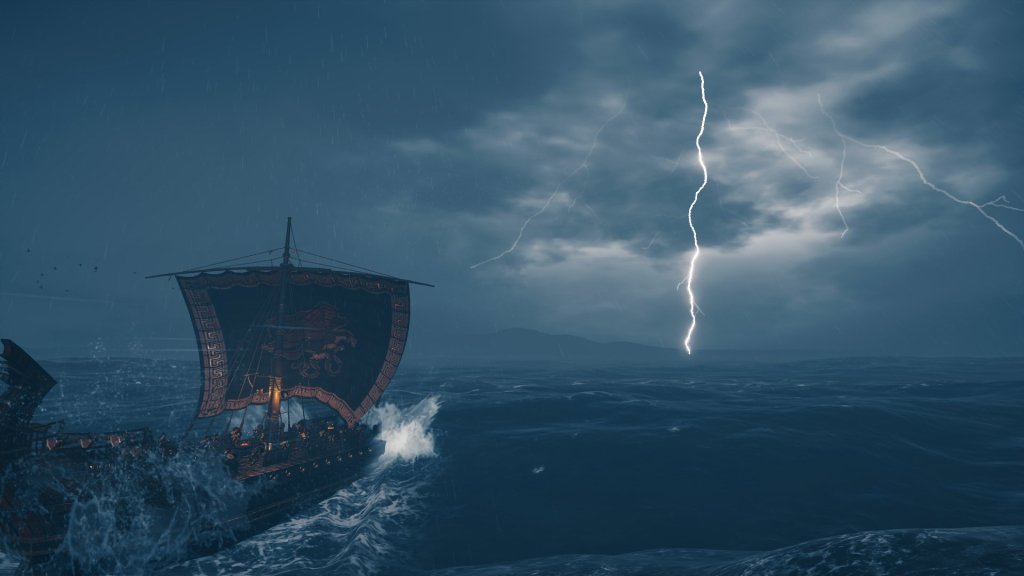
On a lesser note, a lot of the open world activities didn’t feel justified. The best example of this is probably the conquest battles – whilst they are an interesting change of pace, and do make the world feel more lived in, the game didn’t explore the differences between Sparta and Athens enough to motivate me to fight for either side. Ensuring that each contested region had characters who I knew I would be helping or hurting would’ve really helped motivate me to fight in these battles – have side quests touch on what their rulers have or haven’t done for their regions, allowing us to decide whether or not we want to maintain that system. I appreciate that choosing to fight can be explained as ‘the work of a mercenary’ – these soldiers will die anyway, so why not get paid to kill them – but that isn’t nearly as compelling as knowing that by clearing Sparta out of an area, I will be freeing slaves whose suffering I have already witnessed in a side quest, for example.
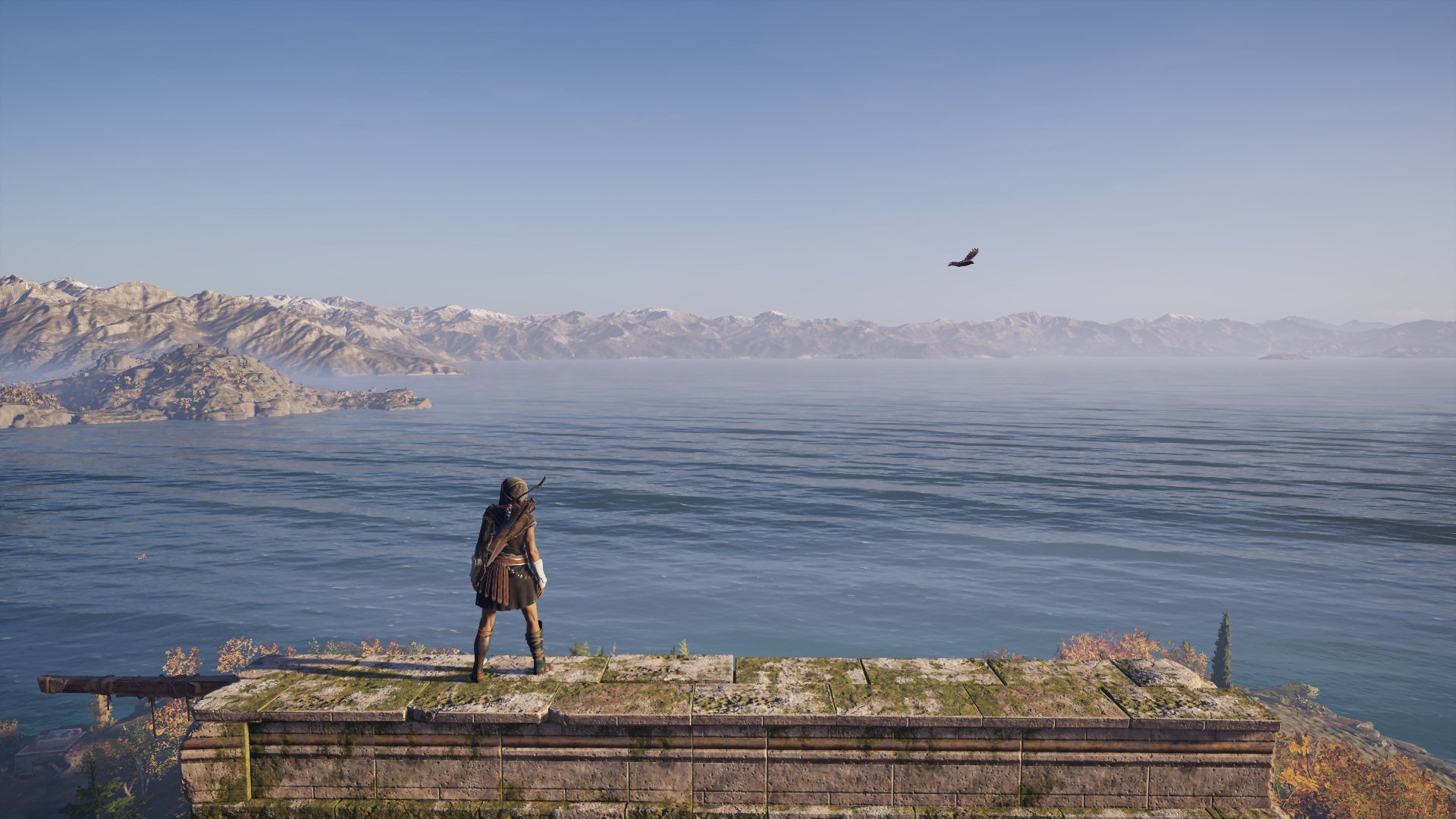
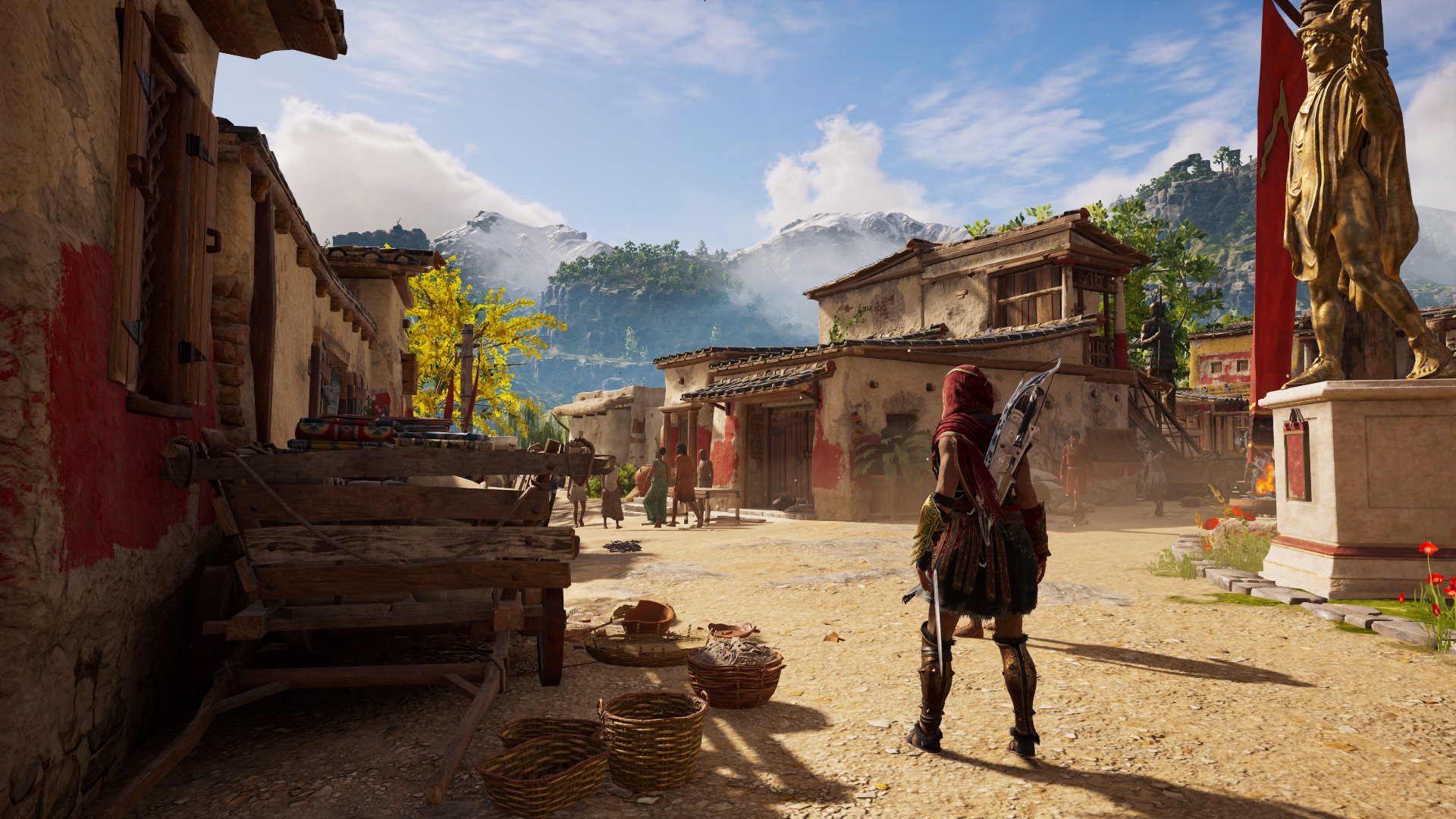
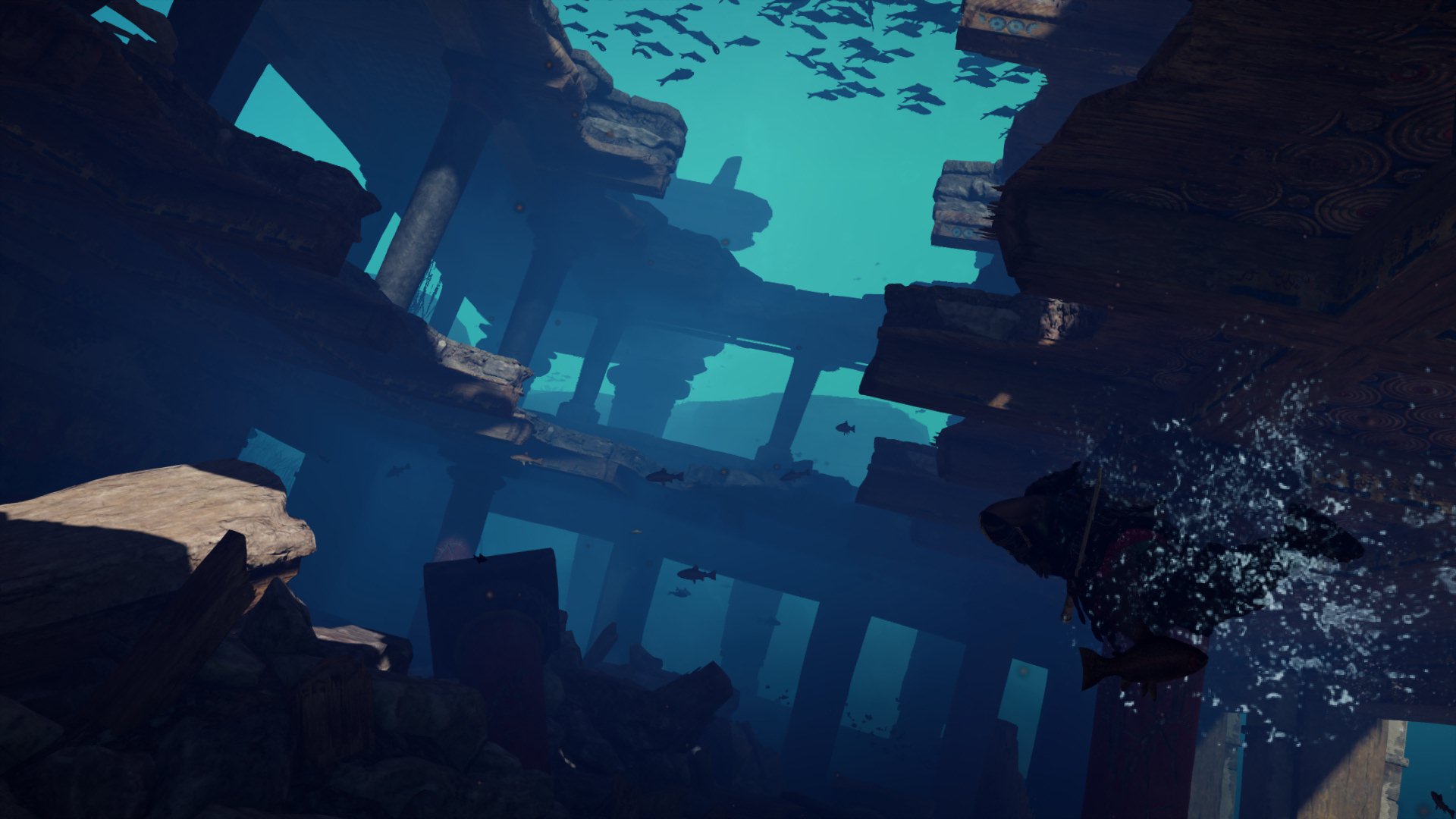
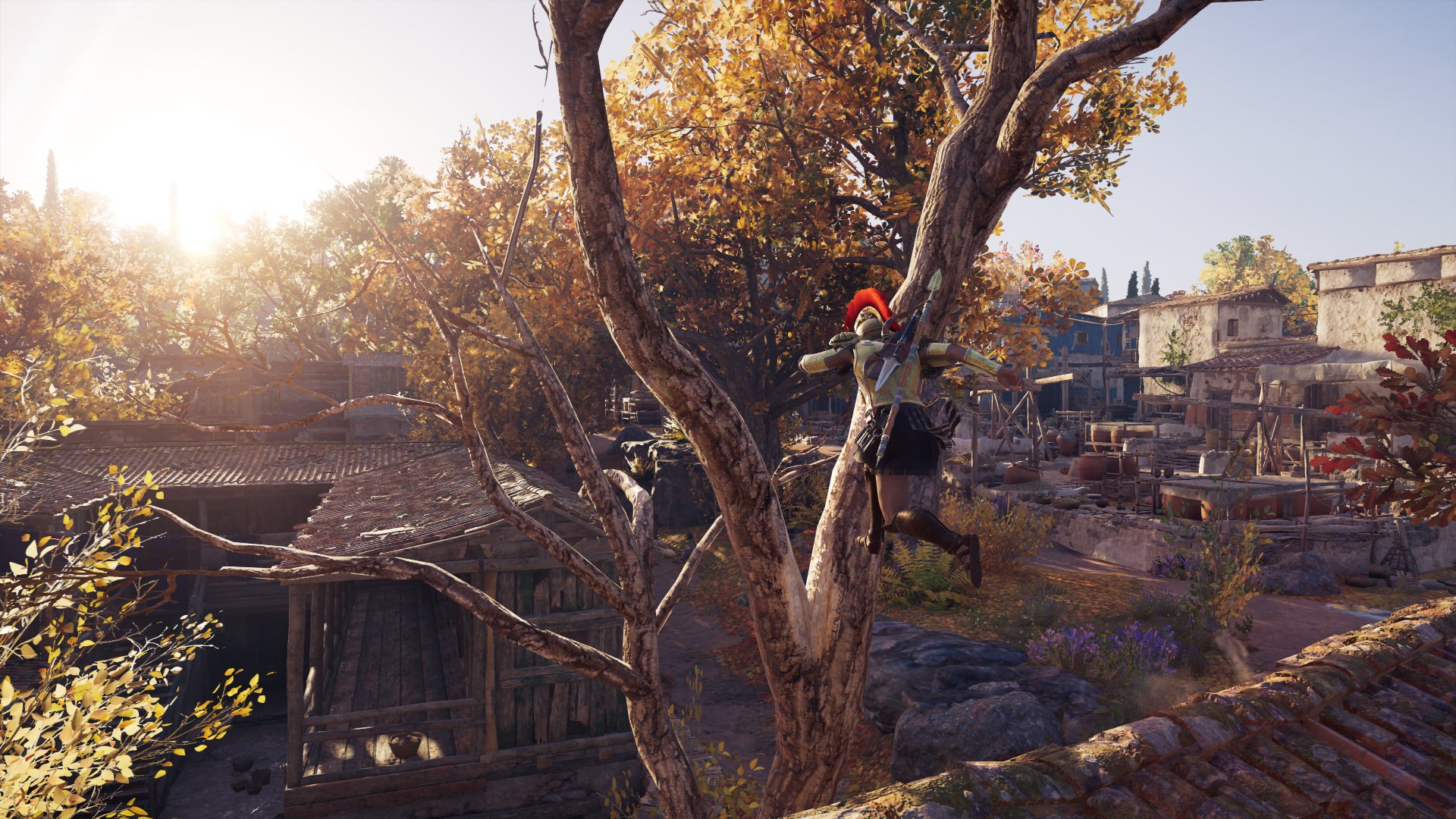
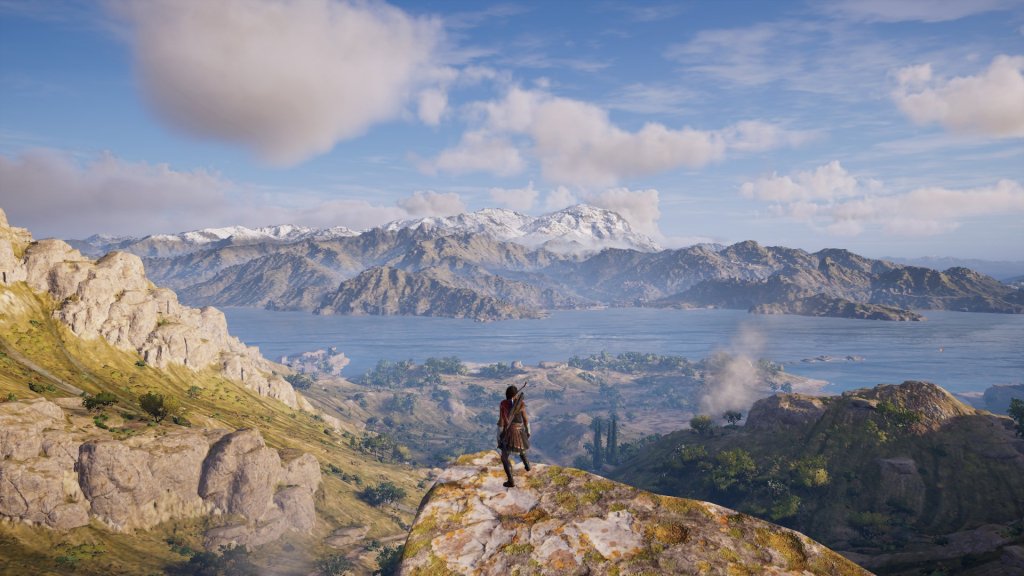
4The world of ancient Greece delivered is beyond picturesque. Bustling cities, curious caves, turquoise lagoons – anyone who wishes to simply set off in a direction in the name of adventure will not be disappointed. I’ve never taken so many screenshots. A lot of effort has been put into this aspect of the game, and I would encourage people to explore it, though perhaps not as the game would instruct them to.
5The game’s kryptonite is the gameplay loop used to ‘discover’. I will go into extensive detail on this in a separate piece, but simply put the player spends more time interacting with the HUD than the world, which is especially sad to see considering how incredible this world really is. Here is how it works: setting a marker via a menu, allowing the game to take you to the marker, panning the camera to tighten a disk, running towards a new marker, then performing the activity. It is far too easy to go into autopilot and completely disconnect from the world and events. As soon as I became comfortable with how the game worked, I opted out of every HUD element I could, and simply explored on my own – if my target was to the North of a mountain, I would simply travel North of the mountain and find them ‘properly’, instead of playing a disc minigame, then blindly chasing a marker without paying attention to my surroundings. When I did this, I had far more fun, but it would be unfair to score the game by this playstyle, since one must explicitly neglect instructions to experience it.
Additionally, immersion is diminished by the fact that combat rarely makes you feel powerful, or in danger – you are relatively weak when it comes to offence, but also near indestructible, which means the player feels neither powerful or stressed in battle – either of these emotions could really elevate our ability to share the emotions of the protagonist.
This game is held back by things the team should not struggle to fix, making me immeasurably excited for the future of the series. Even now, however, whilst Odyssey has some damning flaws, they are outshined by true brilliance. This game offers a compelling blend of the best features from other single player games, and deserves to be celebrated for that.
(The implementation of microtransactions appears to be awful, but I never found a need for them)
 Gamedy